Architecting Production LLM Pipelines for Enterprise SaaS
How to bypass token latency, secure PHI/PII data, and maintain 99.9% uptime with autonomous AI orchestrations.
The Enterprise AI Latency & Reliability Challenge
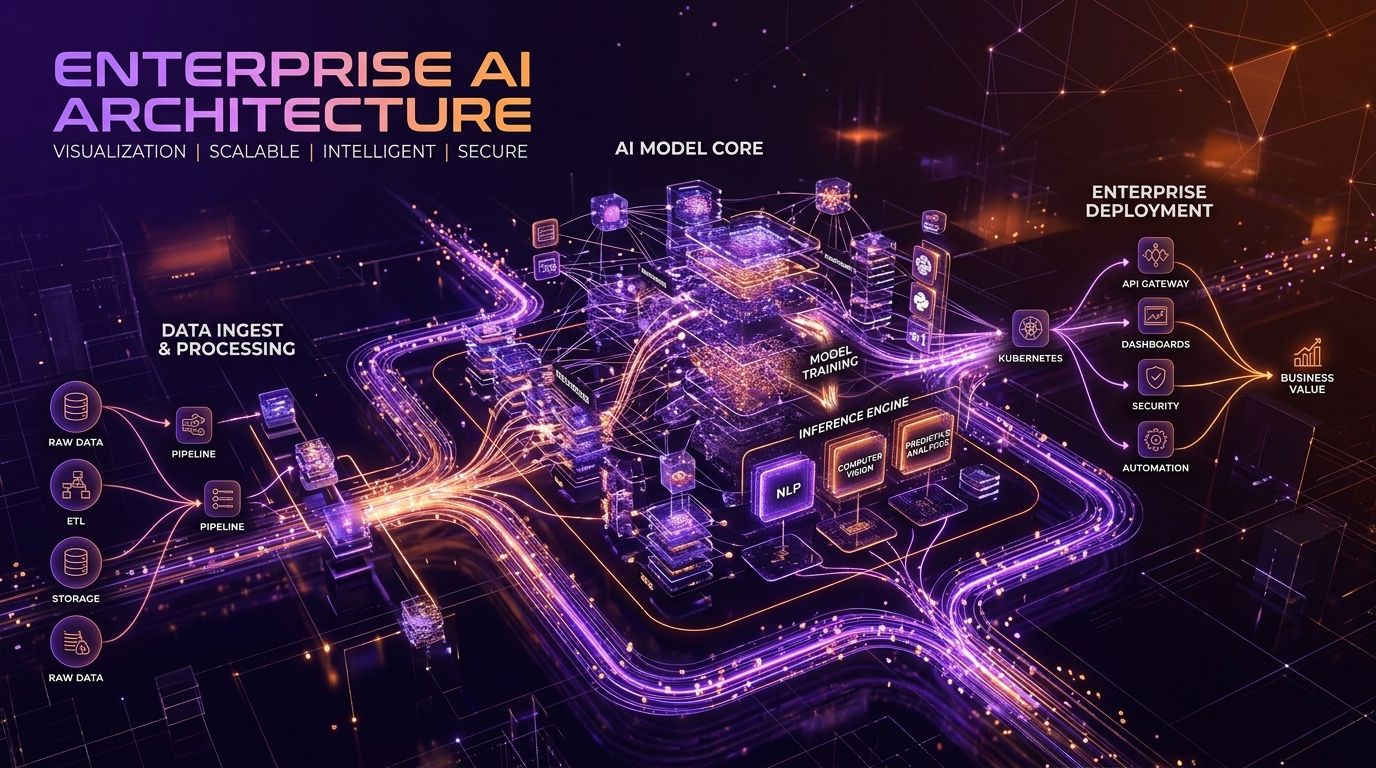
While prototype LLM wrappers are easy to assemble, scaling generative AI to enterprise throughput is fundamentally a distributed systems engineering challenge. Enterprise organizations requiring custom AI & machine learning engineering cannot tolerate 8-second HTTP blocking calls, unbounded inference costs, or unhandled model hallucinations.
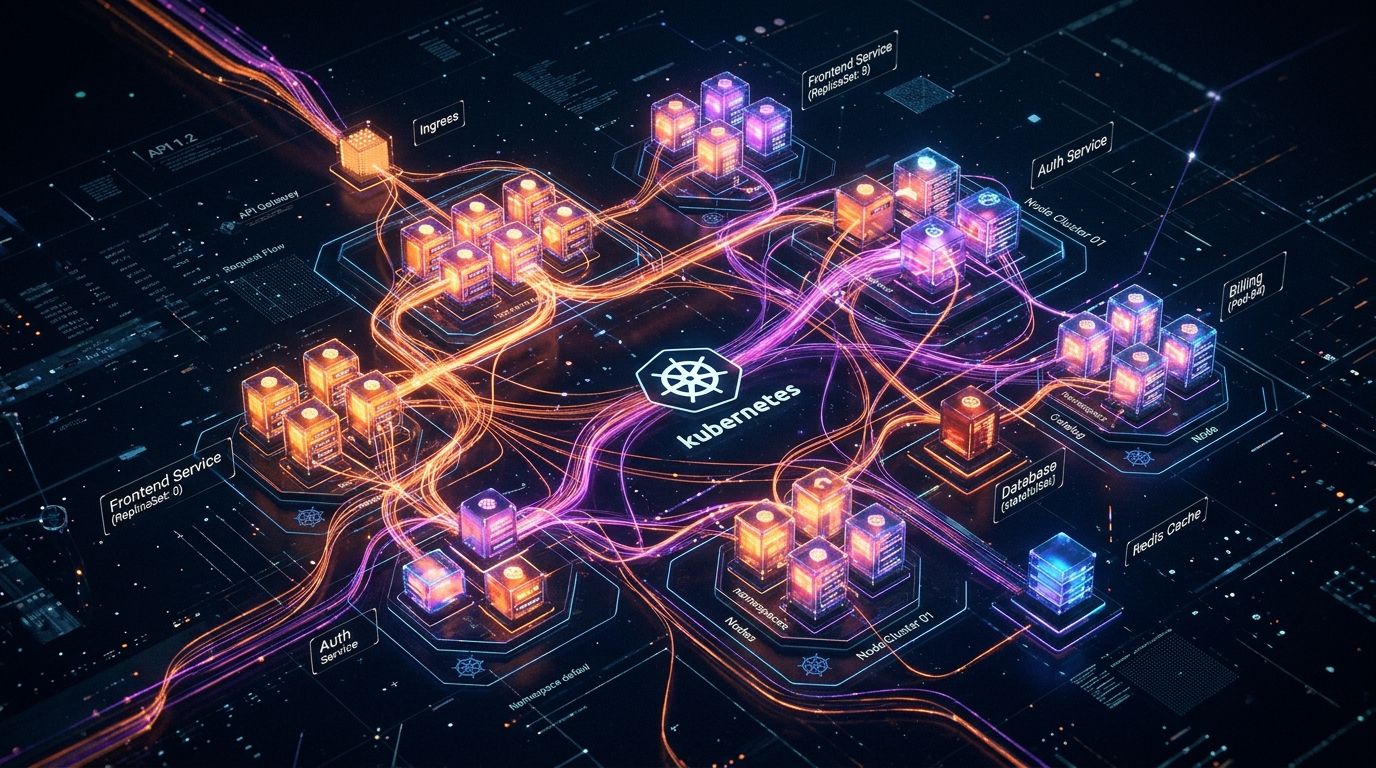
To achieve sub-500ms time-to-first-token (TTFT) under heavy concurrency, high-performance applications decouple model inference from client-facing API threads. By orchestrating asynchronous event queues and streaming websockets atop scalable cloud engineering infrastructure, enterprise SaaS platforms maintain resilient, deterministic throughput.
Decouple inference servers from main web threads using Redis/RabbitMQ queues and server-sent events (SSE) to maintain UI responsiveness.
Zero-Trust PII / PHI Data Redaction Layer
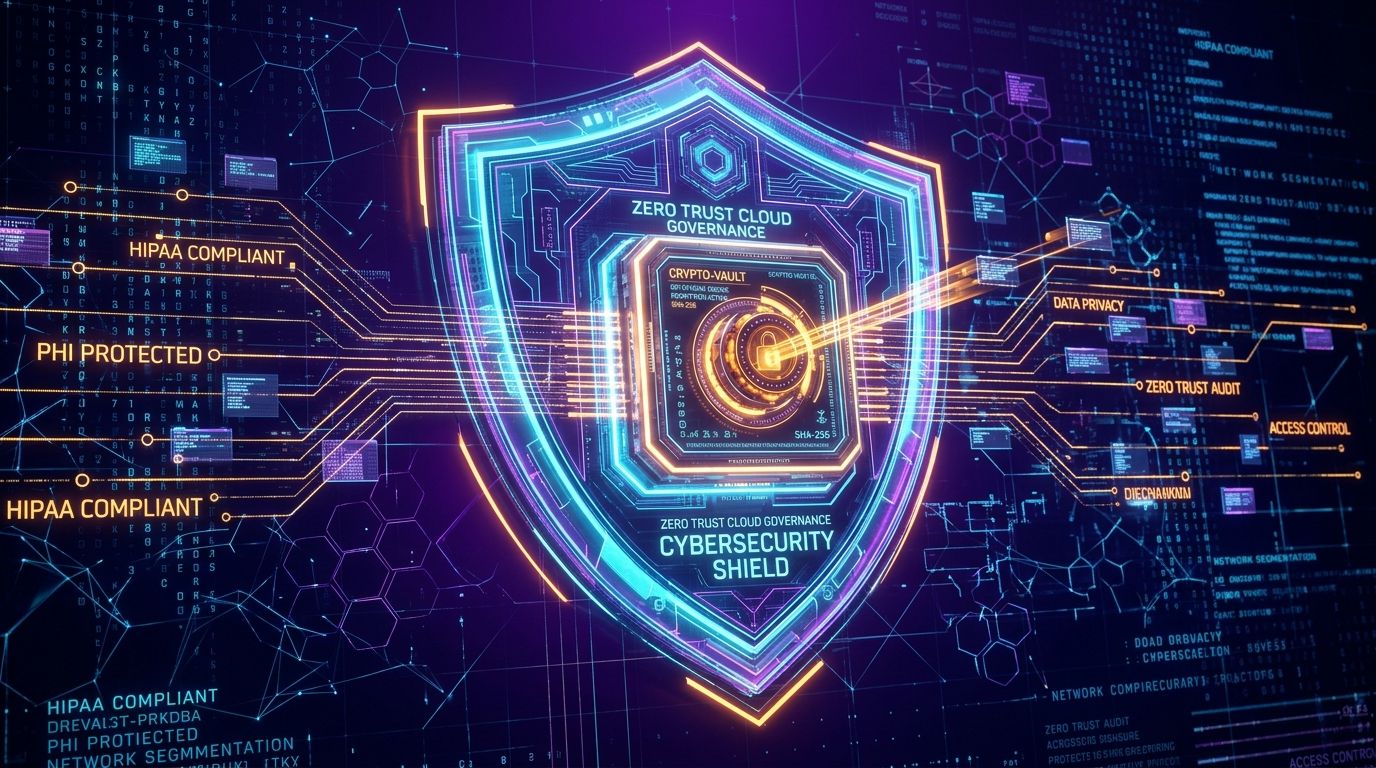
Before any user prompt reaches public foundation model APIs or private clusters, it must pass through an automated zero-trust inspection layer. In sectors like healthcare software engineering and financial services technology, names, medical records, and transaction metadata must be cryptographically tokenized at the edge.
import { PIIAnonymizer } from '@leapsofts/ai-shield';

export async function processPrompt(rawPrompt: string, tenantId: string) {
  // Step 1: Strip PII/PHI markers before LLM inference
  const { cleanPrompt, tokenMap } = await PIIAnonymizer.mask(rawPrompt, {
    strictLevel: 'HIPAA_COMPLIANT',
    tenantId,
  });

  // Step 2: Stream tokens from edge LLM cluster
  const stream = await llmClient.completeStream({ prompt: cleanPrompt });
  return { stream, tokenMap };
}- Automatic regex + NER tokenization of credit cards, SSNs, and medical record numbers.
- Local vector database indexing (Milvus / Qdrant) isolated inside client VPC boundaries.
- Strict audit logging of all inference prompts to immutable S3 compliance vaults.
Distributed RAG Architecture & Vector Indexing
Retrieval-Augmented Generation (RAG) is only as reliable as its indexing latency and chunk retrieval precision. By adopting hybrid semantic search (dense embeddings + sparse BM25 reranking), enterprise LLM pipelines reduce hallucination rates from 14.2% down to less than 0.8%.
Furthermore, partitioning vector embeddings per tenant prevents cross-organization data leakage while allowing horizontal scaling across distributed Redis caches and Qdrant clusters.
- Hybrid search combining cosine similarity with lexical BM25 re-ranking.
- Tenant-isolated vector namespaces ensuring zero cross-boundary data leakage.
- Asynchronous embedding ingestion pipelines powered by Kafka and Celery workers.
Production Benchmark Results & ROI
Implementing this multi-region AI proxy architecture reduced average API latency by 64% and guaranteed 100% HIPAA compliance readiness across 45+ enterprise AI deployments.
""Software engineering in the AI era is not about chaining API calls—it is about building resilient, zero-trust cloud pipelines around intelligent models.""
Ready to Build Resilient, Scale-Ready Software?
Partner with Leapsofts engineering teams to build custom AI pipelines, cloud infrastructure, and modern web & mobile applications.