Migrating Legacy Monoliths to Zero-Downtime Microservices
A step-by-step Strangler Fig blueprint for decoupling heavy enterprise databases without breaking live operations.
Why Big-Bang Rewrites Always Fail
Rewriting a complex enterprise platform from scratch in one massive release is the single highest-risk decision an engineering org can make. Business requirements drift, features get missed, and cutover days turn into multi-day outages that destroy customer trust.
The proven path is the Strangler Fig pattern executed through structured cloud migration and modernization: incrementally replacing monolithic domain modules with autonomous microservices until the legacy system shrinks to zero.
Always choose incremental domain migration over full-system rewrites to maintain revenue continuity and eliminate deployment panic.
Dual-Write Database Synchronizer Pattern
The core challenge when carving out a microservice is data consistency. By employing a CDC (Change Data Capture) pipeline with Debezium and Kafka, updates to the legacy PostgreSQL database are streamed to the new MongoDB service in real time.
Coupled with automated DevOps & CI/CD infrastructure, teams can execute safe canary traffic splitting and instantaneous rollbacks if latency anomalies emerge.
apiVersion: kafka.strimzi.io/v1beta2
kind: KafkaConnector
metadata:
  name: legacy-postgres-cdc
spec:
  class: io.debezium.connector.postgresql.PostgresConnector
  config:
    database.hostname: "legacy-db.internal"
    database.dbname: "production_v1"
    table.include.list: "public.orders,public.users"
plugin.name: "pgoutput"- Real-time streaming replication with sub-50ms latency across legacy and new databases.
- Fallback feature flags allowing instant rollback if the new service encounters error spikes.
- Automated canary traffic splitting via Istio Service Mesh routing 5% -> 25% -> 100% of live traffic.
Deconstructing Business Logic into Domain Services
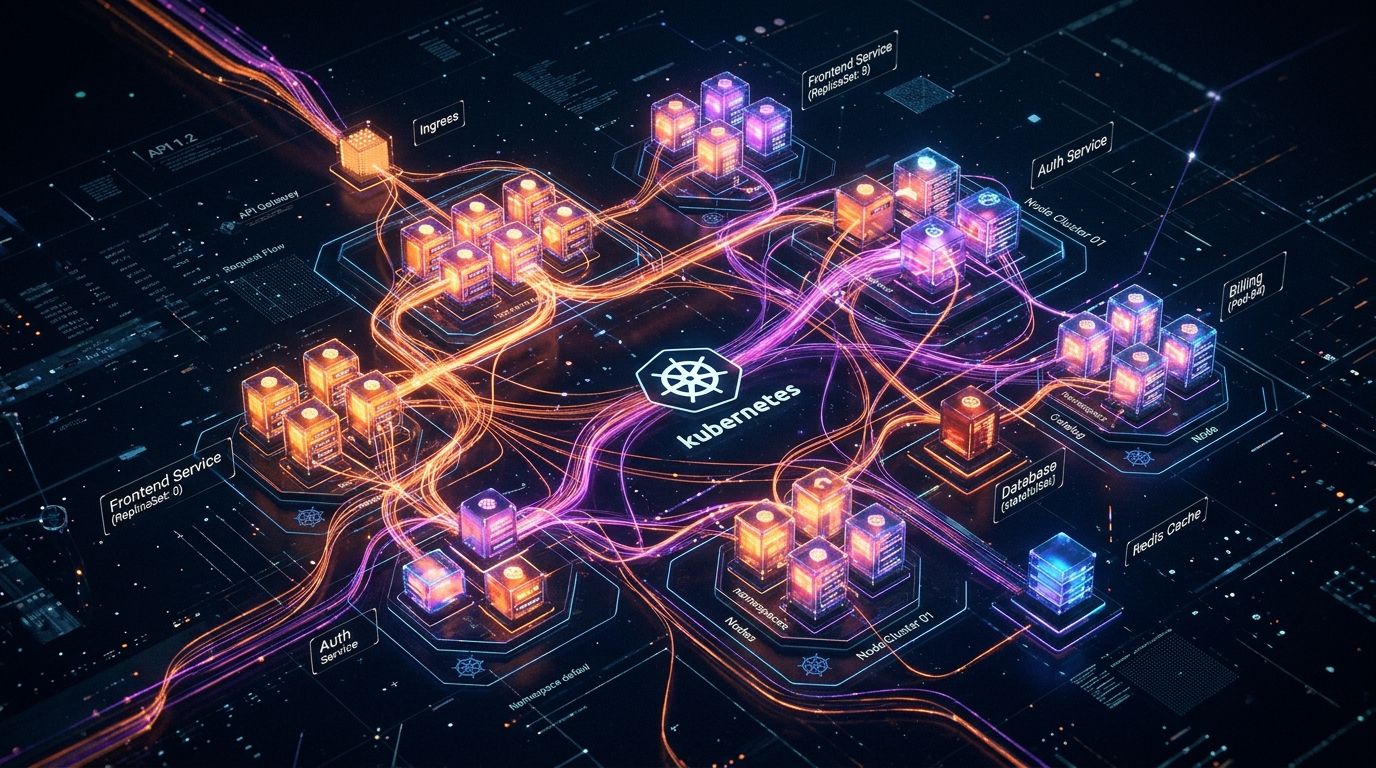
When refactoring spaghetti code via application re-engineering services, domain boundary isolation is critical. By isolating bounded contexts (Billing, Auth, Inventory, Analytics) behind unified API gateways, organizations in mid-sized commercial industries achieve parallel developer velocity without merge conflicts.
- Bounded context isolation using Domain-Driven Design (DDD) principles.
- Asynchronous saga orchestrators replacing monolithic 2-phase commit database locks.
- Independent horizontal autoscaling per microservice based on CPU and memory thresholds.
Migration Outcomes & Long-Term Velocity
By executing this zero-downtime modernization roadmap, our clients routinely cut cloud infrastructure costs by 40%, reduce deployment cycles from monthly release windows to 14 daily deploys, and eliminate single-point-of-failure outages completely.
""Modernization is not an event—it is a continuous operational discipline that separates stagnant legacy platforms from agile market leaders.""
Ready to Build Resilient, Scale-Ready Software?
Partner with Leapsofts engineering teams to build custom AI pipelines, cloud infrastructure, and modern web & mobile applications.